Blog

Tis the season to be jolly, celebrations and giving gifts!
As an Employer, you might be thinking about rewarding your staff with gifts and celebrating by holding a Christmas party.
You might also be wondering if giving gifts and providing entertainment has other implications, such as fringe benefits (FBT) and tax implications.
This will depend on the following, whether the gift is:
- An entertainment or non-entertainment gift
- And costs more or less than $300
Read on to find out more!
The ATO advises ‘where a Christmas gift is provided to an employee at a Christmas function that is also provided by the Employer, whether the gift is an exempt benefit needs to be considered separately from the function’.
‘Hampers or presents given to an Employee at a Christmas function are not considered to be the provision of entertainment. As these are not treated as tax-exempt body entertainment benefits, you can consider the minor benefit exemption. For example, a hamper given to each of your employees at a Christmas function – that meets the conditions of the minor benefits exemption rule and is less than $300 – will not attract any FBT’
Giving Gifts to your Clients
Giving your clients gifts at the end of the year is a way of saying ‘thank you’ may help you retain ‘high’ value clients and ultimately generate future income.
But not all Christmas festive gifts are tax deductible! The following are not.
If the gift or thank you is classed as entertainment then No, the expense is not tax deductible.
Under Tax Determination (TD 94/55) entertainment usually relates to immediate consumption of the item of property. Some examples are;
- hot meals
- glasses of champagne
- theatre tickets
- holiday accommodation
- hired entertainers
Some examples you can claim include;
- Bottled spirits
- Cartons, or bottles of beer or wine
- Computers
- Some gift vouchers
Tip: Keep in mind that if a benefit is exempt from FBT, you typically cannot claim it as an income tax deduction, nor claim any GST credits.
Unsure what this all means, contact Blackburn Accounting we will unwrap and help you understand the gifting tax ‘Rules, fringe benefits tax and Christmas parties.
The Christmas Party
According to the ATO, ‘there is no separate FBT category for Christmas parties and you may encounter different circumstances when providing these events to your staff. The cost of providing a Christmas party is income tax deductible only to the extent that it is subject to FBT. Therefore, any costs that are exempt from FBT (that is, exempt minor benefits and exempt property benefits) cannot be claimed as an income tax deduction.’ The costs of entertaining clients are not subject to FBT and are not income tax deductible.’
‘A Christmas party provided to current employees on your Business premises or worksite on a working day may be an exempt benefit. The costs of associates attending the Christmas party is not exempt, unless it is a minor benefit.’
Example
A small manufacturing company decides to have a party on its business premises on a working day before Christmas. The company provides food, beer and wine.
|
Employer Implications |
|
|
The implications for the employer in this situation would be as follows. |
|
|
If… |
Then… |
|
current employees only attend |
there are no FBT implications as it is an exempt property benefit. |
|
current employees and their associates attend at a cost of $180 per head |
|
|
current employees, their associates and some clients attend at a cost of $365 per head |
|
* Where the benefits are indicated as qualifying for the minor benefits exemption, it is on the basis that the necessary conditions have been satisfied.
Christmas party held off business premises
The costs associated with Christmas parties held off your business premises (for example, a restaurant) will give rise to a taxable fringe benefit for employees and their associates unless the benefits are exempt minor benefits.
Example
Another company decides to hold its Christmas function at a restaurant on a working day before Christmas and provides meals, drinks and entertainment. To find out more,
The ATO website provides details and examples;
https://www.ato.gov.au/general/fringe-benefits-tax-(fbt)/in-detail/fbt-and-christmas-parties/
Entertainment expenses are not tax deductible unless they are subject to FBT. This means expenses incurred in providing a Christmas party are not generally deductible where the minor benefit FBT exemption applies.

Seasons Greetings to everyone!
However and wherever you may be celebrating
Best wishes from the Blackburn Team

BLOG
SMART Goals
It's been said before BUT, it's never too late!
Be smart, design SMART goals to achieve the results you want!
WHO doesn’t want that!
and KEEP READING to find out how you can turn your SMART goals into SMARTER Goals!
The SMART goal method is designed to support you with setting and achieving your goals. Think of it as the guide, with instructions, the steps of what, why, and how to meet your objectives.
What do we mean by SMART?
SMART stands for
- Specific
- Measurable
- Attainable
- Relevant
- Timeframes
Specific: is exactly that.
When setting a goal/s you need to specify what it is you want to accomplish.
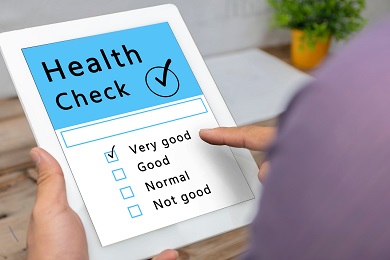
The state of our ‘Business health’ is as important as our own.
A smart Business operator will undertake regular checks of both!
In the following, we examine the Business!
The health of your Business is reliant upon and impacted by the ‘state’ of key parts, you could say these are the vital organs of a small Business!
You can see why undertaking a regular Health Check is critical to the ongoing life, success of your or any small Business.
In the following we examine these vital parts:
- Business Reflection
- Business Planning
- Goal Setting
- Systems and Processes
- Staff Performance
Smart Businesses recognise the importance of taking the time for Business reflection as an opportunity to do just that, reflect, review and revise. Examination allows for any changes or improvements that are needed. Simply put, there are risks if you don’t take the time to reflect and plan!
Business reflection is important, offering a number of benefits.
- Benefits, such as providing the opportunity to step back, take ‘stock’, to see if you, we, are on track or not. This can be said of both the Business and the individual. We can all learn from our mistakes, and failures. Lessons learned that can be built on.
- It is also a way of keeping yourself, ourselves accountable. Who doesn’t want to improve their Business and own performance. It’s the chance to grow and improve and be open to new opportunities that otherwise may pass by.
If you a small Business operator you will understand how easy it is to be taken-over and engulfed by the everyday business of running a Business. Life gets ‘frantic hectic’ and you can lose sight of the bigger picture.
Is that you?
Try these, 5 ‘Easy’ Steps to take to effectively reflect on your Business
- Revisit your Goals.
Revisitng your Goals is the opportunity to ‘take-stock’, critique, and determine where you are in achieving your goals. Are you on track! Have milestones been reached? Analyse, measure performance, acknowledge celebrate gains, and wins and learn from losses.
- Business Planning
Reflection and planning provides benefits, such as, allowing you to prepare for the now and future. Continual planning gives you the focus to get the job done. Importantly it fosters critical thinking and a disciplined approach to conducting yourself and the Business.
It also allows you to examine your strengths and weaknesses and use those experiences to consider other opportunities while recognising the risks. Without reflection and planning you can find yourself, your Business going down the wrong path.
- Goal Setting
November is a time when the smart shopper starts looking at purchasing that special present for family and friends.
BUT, before you rush into a ‘spending frenzy’ take the time to read our following guide,
‘6 Ways to Shopping and Spending Wisely’.
Yes, think before you buy! Thoughtful buying and spending habits can leave you and your loved ones happy and thankful, without the stress of ‘over-debt burden’!
Often the trap of over-spending is getting caught up in the expectations that we place on ourselves, to buy bigger and better, thinking that’s what others expect from us. We want to impress and jump in with all cash registers cha-chinging!
But we pay the price later. If you are living on a ‘budget’ it’s a fact that over committing financially usually brings only stress and pain when the ‘bills’ come in. Why give yourself a ‘debt hangover’, when there are some ways to help avoid it.
6 TopTips, Ways to Shopping and Spending Wisely:
1.Sit down now and review your finances.
Draw up a Budget to establish what can you realistically allocate for Christmas shopping. Vital to stick to it! With rising costs and inflation makes sense to do more with your cents!
2. Don’t spend what you don’t have
or more than you have budgeted for.
3. Paying with cash!
It may be old-fashioned, but its an ‘oldie’ but a goodie - 'if you can't afford it, cash, don’t buy it', particularly when looking at 'descretionary' purchasing, ‘wants’ rather than ‘needs’ items.
4. Be wary of going crazy with credit!
 Your Accounting Partner
 Your Management Accounting Partner
 Your Expansion Engineer
 Your Special Projects Partner