Blog

Managers, leaders, staff, we are all included! We can always find ways to improve productivity!
Did you know, results show that outstanding work productivity comes from a Business culture that empowers its employees to find and develop their own style to achieve maximum performance.
Makes sense that smart Businesses support methods encouraging best practice and habits to improve individual and Team output. Everyone’s a winner, greater satisfaction, better outcomes!!
Read on to find our 6 Tips on ‘how to increase and generate the highest return on work productivity’!
- Create a Culture of Productivity
This begins by cultivating the best possible environment to support it. Features include:
- Lead by example with your work practices
- Reliability and accountability are essential
- Have healthy boundaries around deliverables and deadlines
- Have a balanced daily routine
- Be organized. Review your calendar weekly
- Daily, check tasks progress, completed, unfinished and reschedule as needed
- Avoid distractions
- Stay focused
- Aim for Achievement
- By setting goals and targets with measurable milestones
- Track your time, effort and output
- Unravel the result in terms of ‘value’, importance to the Business and personal goals
- Purpose and passion are key to personal growth and success
- Revise Business practices
- Revise, refine practices if needed
- Choose the appropriate means of communication to suit the situation, text, call, email, meeting
On 9 May 2023, as part of the 2023–24 Budget, the Australian Government announced it will improve cash flow and reduce compliance for small businesses by temporarily increasing the instant asset write-off threshold to $20,000, from 1 July 2023 until 30 June 2024.
This measure is not yet law.
Small Businesses, with aggregated turnover of less than $10 million, will be able to immediately deduct the full cost of eligible assets costing less than $20,000 that are first used or installed ready for use between 1 July 2023 and 30 June 2024.
The $20,000 threshold will apply on a per asset basis, so small businesses can instantly write off multiple assets.
Assets valued at $20,000 or more (which cannot be immediately deducted) can continue to be placed into the small business simplified depreciation pool and depreciated at 15% in the first income year and 30% each income year after that.

What are Routines and How Can They Benefit You
Routines are a sequence of actions that we do repeatedly. A series of activities performed regularly at a particular time, in a particular way.
Simply, a routine is a set of activities, actions and behaviours when implemented help shape, balance and maintain our lifestyle.
Examples are everyday activities, such as brushing our teeth, doing a daily morning run, or following office procedures.
A routine can be repeated as frequently as needed, daily, monthly, with the aim of helping us be more productive, organized and focused.
A daily work routine is a set of behaviours and actions aimed at accomplishing tasks in the most efficient way when undertaken regularly. The weekly shopping, taking the dog for a daily walk, or monthly Team Reporting Meeting, it’s about getting things done in an orderly and efficient way!
The Benefits of Effective Routines include:
- providing structure in our daily activities that can help in reducing stress, lack of concentration and anxiety.
- can help in times of uncertainty and unpredictability by giving us direction and meaning.
- helps reduce the need to plan on a daily basis by taking the guesswork out of what is needed to be done.
Rituals have been part of civilization for thousands of years with social rituals providing emotional comfort and belonging, group cohesion and to practice solidarity. Simply said, they shape and bind a society together.
This evolves by combining a sequence of 'ritual' activities involving words, gestures, actions and sometimes revered objects. Their purpose is varied and can include strengthening social bonds, supporting the emotional needs of followers or fulfilment of religious ideals or obligations.
Rituals do matter!
They influence our behaviours playing a part in our everyday lives, by providing purpose, direction and connection.
Just think about it! Most of us are creatures of habits, with regular rituals. For some, its a morning coffee and reading the paper, while others, such as sport stars, have rituals, routines and habits on game day to help them prepare. Births, Weddings, Funerals, Festivals and seasonal ceremonies are examples of social rituals we observe. 
It's no different in the Workplace there are existing rituals but there is the scope to create new ones!
- A workplace is described as a community of people working towards a common goal, and like other communities uses rituals to help build rapport, stay aligned, and improve motivation.
- Workplace rituals designed to increase employee engagement when followed by the team have the power to influence and positively impact outcomes. Rituals boost company culture as they make employees feel more connected to their colleagues and the organization.
What are Workplace Rituals and Why do they Matter – The Benefits!
Workplace rituals include:
- gatherings, like Team Meetings
- award presentations
- Leadership Workshops
- birthday milestones
- ‘set’ Staff Friday lunch dates
Rituals matter because they can:
- shape, define and build company culture
- help during times of change and uncertainty
- boost focus and increase creativity
- help recognise your Team
- motivate and unite Teams to excel
- provide opportunities to come together
The Benefits:
- allow us to network
- interact with our peers
- share experiences
- build connections and relationships.
- to be part of and engage in a special occasion.
- foster organisational positive behaviours and citizenship
Rituals have the power to positively impact the Workplace by:
It's a fact, that Australia’s economy was built on the passion and productivity of small Business, from the traditional ‘family-run’ corner shops, pubs, cottage industries, farming and more.
With its unique features, the ability to adapt, along with flexibility, creativity and innovation and some risk-taking Small Businesses' have contributed to the economic health and wealth of our society.
In essence, Small Business has been an essential part and backbone of our nation providing a critical source of employment and economic growth that has served us well. And continues to do so!
With recent calls from Federal Treasurer Dr Jim Chalmers for improvement in productivity what better time to consider your Business’s productivity performance and potential for growth?
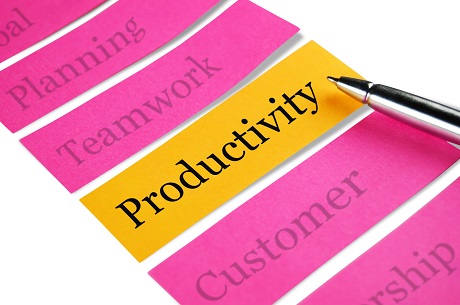
What is P for Productivity! What Does it Mean and Why is it Important for Your Business
Productivity in business is a measure of economic performance that compares the amount of goods and services produced (output) with the amount of ingredients (inputs) used to produce those items. Simply put, ‘the measure of production efficiency’!
Why is Productivity Important?
It is important to us all, as workers and consumers, Business owners and Government policymakers as it shapes our economy’s welfare and ability to support generations now and in the future. At a national level it captures an economy's ability to harness its physical and human resources to generate output and income.
- Productivity means how much you produce by the number of employees or hours worked.
- Productivity growth is described as the process by which people get more, (greater profits & higher wages) from less (less effort, fewer resources, fewer hours at work), overtime.
Many factors affect productivity growth, such as; technological improvements, economies of scale and scope, workforce skills, management practices, changes in other inputs (such as capital), the stage of the business cycle and competitive pressures.
Productivity in Small Business can make it or if lacking can break it!
Being more productive helps grow your Business because it increases profitability, and who doesn’t want the benefits that provides.
6 Tips to Increase Productivity in the Workplace:
- Create a Culture of Productivity
- Aim for Achievement
 Your Accounting Partner
 Your Management Accounting Partner
 Your Expansion Engineer
 Your Special Projects Partner