
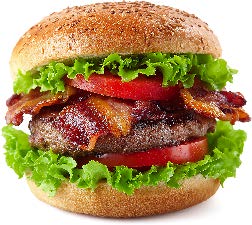
 As fast-food giants’ stores battle cost-of-living challenges, the uncertainty of global markets and the changing economic environment, I'm pleased to report that the good news is that the Big Mac burger is still being served.
You may recall we explored in March 2024, as ‘the Humble Burger, A Great Takeaway Meal or Measure of Success!
We learned that the Big Mac Index is a price index, an informal economic metric created in 1986 by The Economist in the United States to measure purchasing power parity (PPP) between different global currencies. It operates on the theory that an identical basket of goods should cost the same worldwide when converted to a common currency. In this scenario, a Big Mac is the basket item.
What this Index offers depends on the audience and the reader. If you are a world traveller and a Big Mac addict, you may find this helpful or distressing on your journeys. How much are you prepared to pay? And the story continues.
What’s happening in the world of the humble burger?
For McDonald’s, maker of the Big Mac Burger, this product remains a staple, but that doesn’t mean sameness. To stay relevant, the ‘how’ is changing to meet different, new tastes. For example, the Big Mac now offers different ingredients, structure, formats, and flavour-led innovation. Macs are served with menu extras such as wraps, bowls and food bundles. Sauce varieties continue to define the real product identity, offering selections of ketchup mayo, sweet pickle and yellow mustard, to name a few.
Is the Big Mac still popular, pulling its weight among burger brands?
According to a recent report, tastewise dish popularity shows Burger at 72% social share and Big Mac at 67%, indicating that core demand remains.
It has, however, experienced a notable decline in popularity and customer traffic driven by perceived loss of value, due to rising menu prices and strong competition from rivals. Financial reports have highlighted domestic and global sales declines with considerable transaction drops in major markets, including the US and competitive pressures in Australia from new rivals like Guzman Y Gomez.
Decline factors include:
Value perception - customers feel portion sizes have shrunk while prices have risen, making the brand feel less affordable.
Increased competition - alternative chains and fast casual food speciality outlets are taking market share away.
Economic pressure: with cost-of-living pressures, many households have cut back on fast food, instead eating at home.
Down under, in Australia, the rise, resurrection, and fall of fast-food operators and outlets continue.
-
In the news, fast-food giant Wendy’s has detailed a plan to open 200 restaurants across Australia. This latest commercial push follows a record-shattering opening-day launch in Queensland, where sales figures broke the company’s global records.
-
And Guzman Y Gomez is reported as ‘taking a disciplined approach to opening 1000 stores in Australia’. The most recent in Wanneroo, taking its total to 17 in Western Australia. A company spokesperson said, ‘We always look for triple-A real estate.’ Features include a corner site, main road access, easy car parking, and dual-lane drive-thru.
Leads us to the question, ‘What is the key to success in this or other Business sectors’?
The answer: Watch for ‘Strategies for Business Success’.
Footnote: McWage Index! A Princeton University professor who has been tracking data on wages at McDonald's and comparing it to the cost of a Big Mac across many countries for a quarter of a century reports Australia's performance has been consistent on this index. It has been a top performer, ranking No. 1 according to the latest 2025 figures. With a minimum wage of $26.44 per hour, Australia remains higher than most rich countries.
 Your Accounting Partner
 Your Management Accounting Partner
 Your Expansion Engineer
 Your Special Projects Partner