
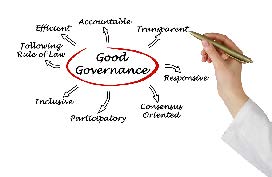
 It’s a must-have essential item, fundamental to best Business practice. It’s not an accessory, something nice to have, nor, should it be ignored or tampered with!
Good governance applies to a wide range of organisations, including private companies, public sector agencies, local councils, family business and charities. The structure of your Business will determine many aspects of governance.
Good governance is not something that only big business should worry about. Good ‘professional’ governance is crucial for any small Business if it is to survive.
Simply put, strong corporate governance helps improve decision-making, reduce risk, and help build a foundation for sustainable growth and a positive reputation. It’s your internal system of checks and balances, a framework supporting and safeguarding stakeholder and your Business interests.
SME’s unlike large enterprises with a full Board of Directors, may instead rely on external consultants, or advisory boards but still with the same objectives, that leadership decisions support the Business ‘health’, satisfying all legal requirements and moral obligations.
7 Key ingredients for effective governance are
-
Clear Roles & Responsibilities: It starts here. Everyone involved in the Business should know and understand their responsibilities, what that means, and where their authority starts and ends. Importantly, their legal and ethical requirements and obligations.
-
Decision-Making: the processes must be transparent. Document how key decisions are made, by whom and why i.e who has authority, who is responsible, who can sign and where decisions are recorded. There should be a clear and open path for all transactions.
-
Ethical Conduct: adopt and implement clear codes of conduct (written & unwritten), to inform and guide behaviour. Promote and educate parties concerning matters such as conflicts of interest. Take these steps to foster and build a culture of integrity.
-
Accountability & Reporting: keep accurate financial records regularly review and ensure everyone is answerable for their actions or lack of. Conduct meetings as needed and, importantly, hold annual meetings. Involve all relevant stakeholders and officials and avoid clandestine out of office chats for a selected few.
-
Compliance with Regulations & Laws: Crucial to stay up to date with obligations under relevant authorities. e.g under Australian law, such as, tax, consumer, employment and privacy rules.
-
Risk Management: is about looking at prevention, how to identify and mitigate potential threats before they become major problems. Reputation, legal, and financial are examples. Contracts, appropriate insurance and workplace policies are all part of risk management.
-
Seek expert help: If you have any questions about any business matters, Blackburn Accounting is your family Business Specialist. We offer solutions to issues in financial structures, succession planning, strategic planning, non-family management, and more.
Why every Business needs it!
-
Good governance structures protect, best serve the business and customer needs. Without it or if systems are weak or have loopholes the Business and stakeholders are at risk! See examples below.
-
An example, the RAC, the 120 year old motoring mutual is seeking approval from members to become a company gaining the power to issue shares and pay dividends. This is a step towards modernisation of RAC and its outdated governance structures, suggesting it has outgrown the Associations Incorporation Act. Members will largely be unaffected by the change.
-
A call for better reporting, the comments from a round table discussion of WA Directors who believe that Boards ‘should come clean on sudden departures that leave investors in the dark’. This topic was raised after recent unexplained abrupt exits of directors in the mineral and resources sector.
-
The massive public sector fraud at the Housing Authority in 2019 was reported and described as a combination of poor governance factors. These included insufficient monitoring, lack of and inadequate internal controls and inconsistent policies and oversight. A lesson for every Organisation!
-
Good Governance – Why Every Business Needs It!
 Your Accounting Partner
 Your Management Accounting Partner
 Your Expansion Engineer
 Your Special Projects Partner